Why tiny house permits get rejected
Tiny house projects are refused mostly on zoning, not carpentry: the zone does not allow a dwelling that small or needs a conditional use permit, the house is on wheels and treated as a recreational vehicle, it lacks a permanent foundation or utility connections, or the design fails the code's ceiling, loft, guard or egress rules.
Updated
Want us to prepare it? Tiny house permits are prepared on quote.
Get a quoteKey facts
- Albion, Idaho, allows tiny houses only in zones where single-family homes are allowed, and only with a conditional use permit from the city.[1]City of Albion, Idaho, Ordinance No. 2025-06-01, Tiny House Regulations
- The ordinance is explicit about the default: no tiny house or park model will be placed on any property except as permitted by the city code.[1]City of Albion, Idaho, Ordinance No. 2025-06-01, Tiny House Regulations
- Albion's definition of a tiny house dwelling excludes recreational vehicles, park trailers and tiny houses on wheels, and its ordinance requires those used as dwellings to be in an approved RV park.[1]City of Albion, Idaho, Ordinance No. 2025-06-01, Tiny House Regulations
- Boise, Idaho, describes travel trailers, fifth-wheel trailers and park model RVs as temporary living quarters for recreational, camping or seasonal use, not year-round dwellings.[2]City of Boise, Idaho, Planning and Development Services, Tiny Houses
- In Colorado, state-certified Tiny Homes have their plans approved by the Division of Housing before construction.[4]Colorado Department of Local Affairs, Division of Housing, Tiny Homes and Tiny Houses…
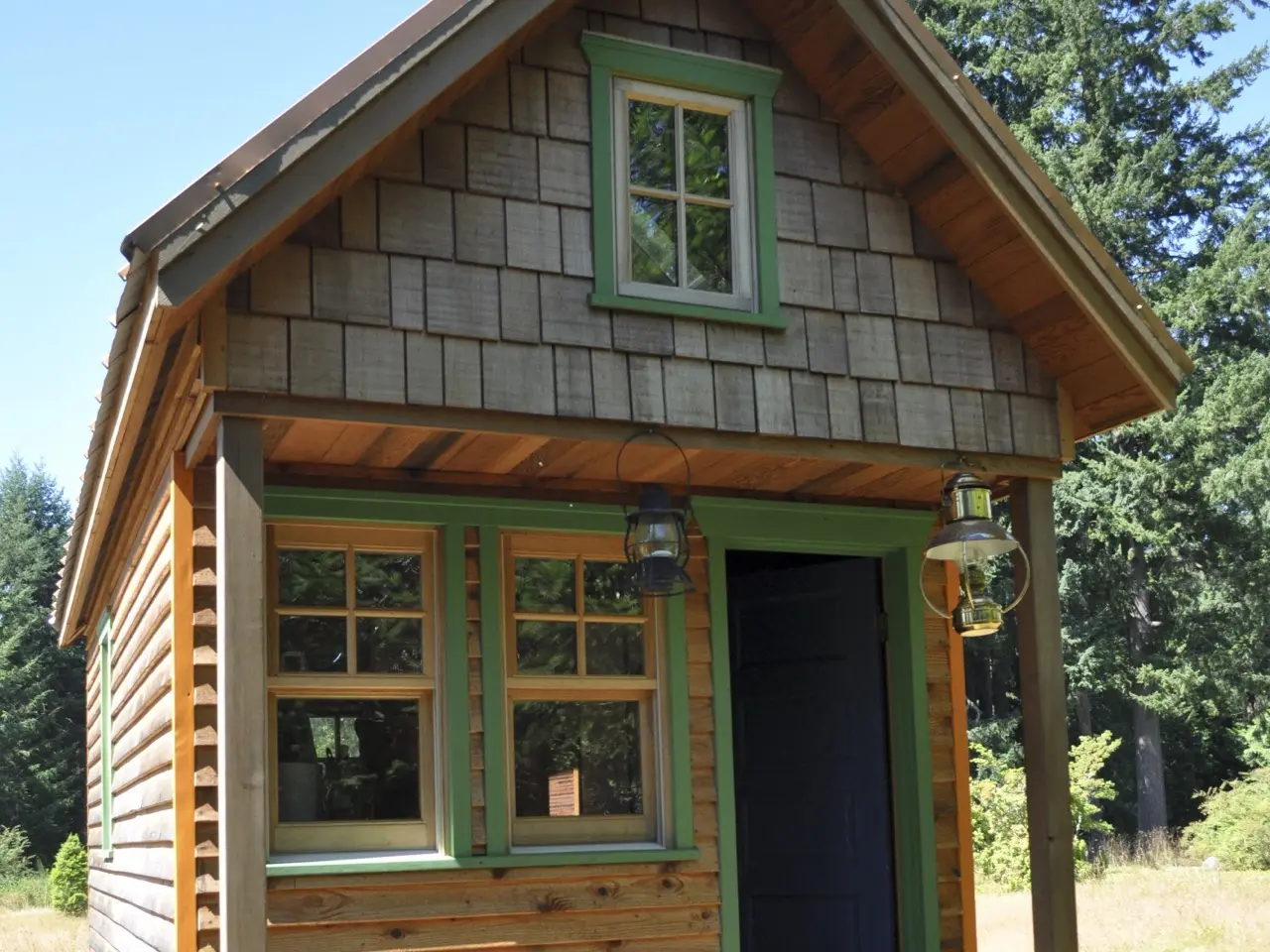
Why do tiny house permits get rejected?
A tiny house is small, but to a city it is a home: a place where someone sleeps, cooks and needs to get out in a fire. Most refusals have nothing to do with craftsmanship. They come from the definitions in the zoning code and from a few building code rules that small spaces make hard to meet.
1. The zone does not allow it, or not without a hearing
Zoning decides where a dwelling can go, and many codes were not written with 400-square-foot homes in mind. When a city does write tiny house rules, they can be demanding. Albion, Idaho, allows tiny houses only in zones where single-family homes are allowed, and only with a conditional use permit from the city[1]. It also requires each tiny house to be on its own lot, meet the zone's setbacks and development standards, provide two off-street parking spaces, and comply with the International Fire Code, including fire access[1].
The ordinance is explicit about the default: no tiny house or park model will be placed on any property except as permitted by the city code[1]. A backyard tiny house next to an existing home, in a city like that, fails on the own-lot rule before anyone looks at the plans.
2. It is on wheels
This can stop the project. Albion's definition of a tiny house dwelling excludes recreational vehicles, park trailers and tiny houses on wheels, and its ordinance requires those used as dwellings to be in an approved RV park[1]. Boise, Idaho, describes travel trailers, fifth-wheel trailers and park model RVs as temporary living quarters for recreational, camping or seasonal use, not year-round dwellings[2].
Where a path exists, it has conditions. Boise has allowed tiny homes on wheels in some zoning districts since July 1, 2025, but only units under 400 square feet with independent living facilities, certified to the NOAH+ standards or other standards the city adopts, and RVs are not included[2]. A self-built trailer house with no certification does not fit that definition.
3. No permanent foundation or utility connections
The cities that accept tiny houses as homes treat them as buildings. Boise states that tiny houses need to be on a permanent foundation[2]. Albion requires a permanent foundation and connections to city water, sewer and electricity[1]. In Albion, a plan that leaves the house on blocks, or off the city's water, sewer and power, does not meet the ordinance.
4. The design fails the tiny house rules
Even where the appendix applies, it has hard minimums. Applications come back for the same few items, each listed by Boise[2]:
- Ceilings too low: habitable space and hallways need at least 6 feet 8 inches and bathrooms, toilet rooms and kitchens at least 6 feet 4 inches, and beams, ducts or lights may not hang below those heights.
- A loft too small: at least 35 square feet and 5 feet in every horizontal dimension, not counting the parts under a sloped ceiling with less than 3 feet of headroom.
- No loft guard: at least 36 inches high, or half the clear height to the ceiling if that is less, along the open sides.
- No way out: the house must meet the emergency escape rules; a roof window serving a sleeping loft must have the bottom of its opening no more than 44 inches above the loft floor and meet the minimum opening area.
5. The rule you designed to was not adopted
The tiny house appendix is optional. Its own text says its provisions are not mandatory unless specifically referenced in the adopting ordinance, and adopters change it: Washington's version, as published by Seattle, sends loft ceiling heights to the main code and adds an air leakage test[3]. A design drawn to the model appendix can fail in a jurisdiction that never adopted it, or adopted a different version.
6. The unit has the wrong approval
Factory-built homes need the right paperwork before a city will place them. In Boise, modular and manufactured tiny houses must be permitted by the state and by the city to be placed on a foundation[2]. In Colorado, state-certified Tiny Homes have their plans approved by the Division of Housing before construction[4]. A unit bought without the state approval cannot simply be permitted after delivery as if it had one.
What building or living without approval risks
- Being told to move: under Albion's ordinance, a tiny house can only be placed where the city code permits it, and wheeled units used as dwellings belong in an approved RV park[1].
- Paying to legalize or remove: in New York City, legalizing unpermitted work on a one- or two-family home carries a $600 civil penalty, and removing it instead carries the same penalty[5].
- Problems at sale: Fairfax County, Virginia, applies its unpermitted construction rules to properties that were bought and sold, regardless of when the work was done[6].
How to avoid a refusal
Settle the route and the zoning before buying plans, then design to the version of the code your jurisdiction has actually adopted. Tiny houses are quoted individually rather than sold as the All-in offer: send your address and plans, and the quote shows your city's real rules and published fees before you commit.
Common questions
Why won't my city let me live in a tiny house on wheels?
Usually because its code treats it as a recreational vehicle, which is designed for temporary or seasonal use. Albion, Idaho, requires RVs, park models and tiny houses on wheels used as dwellings to be in an approved RV park. A few cities, such as Boise, Idaho, allow certified tiny homes on wheels in some zones.
Can I put a tiny house in my backyard?
Sometimes, usually as an accessory dwelling unit under the city's ADU rules, or under a specific tiny house rule. Albion, Idaho, by contrast, requires each tiny house to sit on its own lot.
Does the tiny house appendix apply everywhere?
No. The appendix is not mandatory unless the adopting ordinance references it, and states amend it. If your jurisdiction has not adopted it, a tiny house is designed under the regular residential code.
Can I appeal or reapply?
A design problem, such as a loft or ceiling height, is fixed on the drawings and resubmitted. A zoning refusal needs a different route, such as a conditional use permit or an ADU application where the code offers one, and those have their own hearings and fees.
Let us prepare your tiny house permit
We research the rules that apply at your address and tell you exactly what your city needs before you commit to anything.
Sources
- City of Albion, Idaho, Ordinance No. 2025-06-01, Tiny House Regulations (passed June 3, 2025). Checked October 13, 2026.
- City of Boise, Idaho, Planning and Development Services, Tiny Houses. Checked October 13, 2026.
- City of Seattle, 2021 Seattle Residential Code, Appendix AQ, Tiny Houses (with Washington amendments). Checked October 13, 2026.
- Colorado Department of Local Affairs, Division of Housing, Tiny Homes and Tiny Houses Information Center. Checked October 13, 2026.
- New York City Department of Buildings, Form L2 instructions, civil penalties for work without a permit (rev. 03/2026). Checked October 13, 2026.
- Fairfax County, Virginia, Department of Code Compliance, Unpermitted Construction (September 2024). Checked October 13, 2026.