Fence permits, explained
The model building code exempts fences up to 7 feet high from a building permit, but many cities require a separate fence or zoning permit for almost any fence, and all of them limit height by yard: often 3 to 4 feet in front yards and 6 to 8 feet in side and rear yards. Corner lots, easements and pool barriers add rules.
Updated
Rather not do this yourself? We prepare your fence permit file for your address, and revise it until approved.
Get my permit · $399Key facts
- The International Residential Code (IRC), Section R105.2, lists "fences not over 7 feet high" among the work that needs no building permit.[1]City of Benson, Arizona, Work not requiring a permit, according to the 2024…
- Property line. Cleveland Heights allows fences on the property line.[2]City of Cleveland Heights, Ohio, Fence permitting information
- Waverly asks for a dimensioned plot plan with the fence location, height and any easements.[4]City of Waverly, Iowa, Fence Permit, residential fence regulations
- Parkland, Florida, applies Florida Building Code requirements that limit the spacing of vertical members to 4 inches where horizontal members are 45 inches or more apart, and require access gates to be self-closing and self-latching and to open outward away from the pool.[8]City of Parkland, Florida, Wood fence requirements per the Florida Building Code and…
- Where a permit was required, starting first can cost more than the permit: Carmel-by-the-Sea, California, issues a stop-work order for work begun without a required permit and charges a stop-work investigation fee plus double permit fees before issuing it.[9]City of Carmel-by-the-Sea, California, Stop Work Orders and Emergency Permits
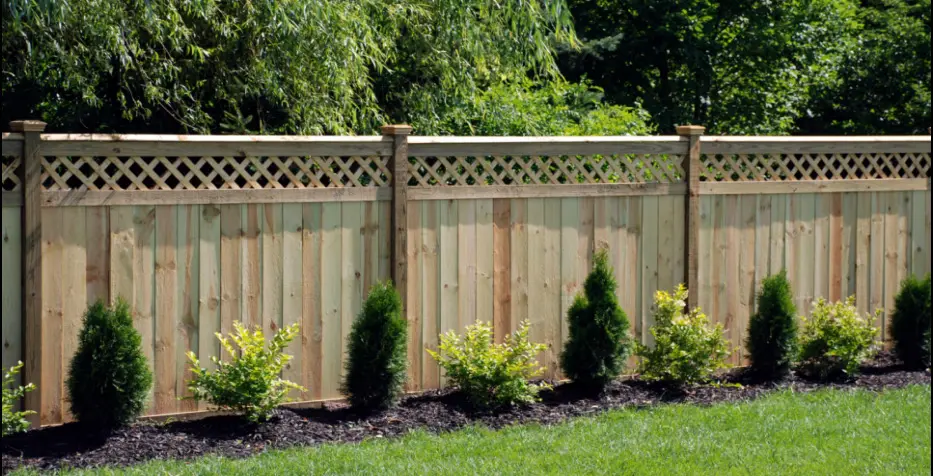
Do you need a permit for a fence?
There are two separate questions, and most confusion online comes from mixing them up.
The building permit is about structure. The International Residential Code (IRC), Section R105.2, lists "fences not over 7 feet high" among the work that needs no building permit[1]. So a typical 6-foot privacy fence needs no building permit under the model code.
The fence or zoning permit is about location and height: is the fence on your land, in the right yard, at the right height, out of the way of drivers and utilities? Many cities require this permit even when no building permit is needed. Duluth, Minnesota, explains why it regulates fences: fence permits make sure fences do not block the public right of way or cross into others' property, and building permits make sure they are structurally sound and resist wind loads[3].
| City | When a permit is required |
|---|---|
| IRC model code (2024) | No building permit for fences up to 7 feet[1] |
| Cleveland Heights, Ohio | A fence permit for any fence; masonry and stone walls need a building permit instead[2] |
| Duluth, Minnesota | A fence permit for any fence 4 feet or taller; a fence permit and a building permit above 7 feet[3] |
| Waverly, Iowa | A fence permit before construction begins, reviewed by Community Development[4] |
| San Diego, California | No building permit for fences of 7 feet or less that meet the city's conditions; others must be designed by a registered design professional[5] |
The lesson: "fences under 7 feet don't need a permit" is true for the building code and false in plenty of cities. Check both.
How tall can your fence be?
Height limits come from the zoning code and change from yard to yard. Real examples:
| City | Front yard | Side and rear yards |
|---|---|---|
| Cleveland Heights, Ohio | 4 ft (primary front yard) | 6 ft (secondary front, side and rear)[2] |
| Duluth, Minnesota | 4 ft, or up to 6 ft if ornamental and at least 50% open | 8 ft in required side and rear yards[3] |
| Waverly, Iowa | 3 ft | 6 ft[4] |
| San Diego, California | 3 ft for solid fences on the front or street side property line | Up to 9 ft, with any part above 6 ft open[5] |
Watch for the special cases:
- Corner lots. Duluth applies front yard standards to both frontages of a corner lot[3]. In Waverly, a corner lot may have two front yards, and a fence between the house and the curb may be limited to 3 feet[4].
- Next to a house. Cleveland Heights limits a fence beside a house, including a neighbor's house, to its distance from that house: a fence 3 feet from a house can be no more than 3 feet tall[2].
- Sight areas. In San Diego, fences in visibility areas cannot exceed 3 feet[5].
Where the fence can go
Property line. Cleveland Heights allows fences on the property line[2]. Duluth allows them along or within the property line but at least 3 feet from a street or alley right of way, and warns that the right of way often extends into the front yard beyond the sidewalk or curb[3]. Waverly makes locating the property pins the owner's responsibility[4].
Easements. Waverly says no structure can be placed within a utility or drainage easement[4]. Duluth bars fences from drainage easements and floodways[3].
Materials. Duluth prohibits chain link, electrically charged, barbed or razor wire and temporary plastic fencing in front yards, with an exception for a vinyl-coated chain link fence up to 4 feet with a permit[3]. Cleveland Heights bans barbed wire everywhere and chain link in front yards, and requires the structural side of the fence to face the owner's property[2].
What the city asks for
A fence application is a site plan. Duluth asks for a plan, hand-drawn or made with software, showing the location, height and length of the fence, existing structures, an accurate lot outline and the 3-foot setback from the right of way; the owner must apply, or sign a consent for someone applying on their behalf[3]. Waverly asks for a dimensioned plot plan with the fence location, height and any easements[4]. In Cleveland Heights, a fence parallel to and visible from the street and longer than 10 feet also needs a landscaping plan, and a fence in a front yard or on a corner lot needs Architectural Board of Review approval before the permit can be issued[2].
Pool fences are a different job
A fence that serves as a pool barrier follows pool safety rules on top of the fence rules. Parkland, Florida, for example, applies Florida Building Code requirements that limit the spacing of vertical members to 4 inches where horizontal members are 45 inches or more apart, and require access gates to be self-closing and self-latching and to open outward away from the pool[8]. If your fence will enclose a pool, say so in the application.
Replacing an old fence
Replacing a fence is not always "like for like" in the eyes of the city. Cleveland Heights requires its Architectural Board of Review approval even to replace an existing fence or wall in a front yard or on a corner lot[2]. The height and material rules apply to the new fence as they are today, not as they were when the old one went up. One small exception from the same city shows how specific the rules get: temporary deer netting around vegetable and flower gardens needs no fence permit, may be 6 feet tall, and must come down at the end of the growing season[2].
What a fence permit costs
| City | Fee | Source |
|---|---|---|
| Waverly, Iowa | No fee | Fence permit page[4] |
| Oakdale, Minnesota (2025) | $47.50 up to 6 ft, $58 over 6 ft | 2025 fee schedule[6] |
| Canandaigua, New York (2026) | $50 | 2026 fee schedule[7] |
| Duluth, Minnesota | $100, paid online | Fence permits page[3] |
Building the fence without a permit
Fences are on the property line, in full view of the neighbors, so a missing permit is easy to notice. Where a permit was required, starting first can cost more than the permit: Carmel-by-the-Sea, California, issues a stop-work order for work begun without a required permit and charges a stop-work investigation fee plus double permit fees before issuing it[9].
Where we come in
For a fence, the permit file is a precise site plan: the fence line, its height in each yard, the property line, the easements and the right of way, with the fence details your city wants and the right form. Our permit team prepares it for your address, with the zoning rule, its article number and the link. The All-in offer adds our review before you file and handles every round of city comments until the permit is issued.
Common questions
How tall can a fence be without a permit?
Under the model International Residential Code, a fence up to 7 feet high needs no building permit. That is only the building code. Cities often require a zoning fence permit anyway, Duluth, Minnesota, for any fence 4 feet or taller and Cleveland Heights, Ohio, for any fence at all.
How tall can a front yard fence be?
It is set by your zoning code. Cleveland Heights, Ohio, allows 4 feet in the primary front yard, Waverly, Iowa, 3 feet, and San Diego, California, 3 feet for solid fences on the front or street side property line.
Do I need a permit to replace an existing fence?
Often yes. Cleveland Heights, Ohio, requires a permit for any fence and says replacing a fence in a front yard or on a corner lot still needs its Architectural Board of Review approval.
Can I build a fence right on the property line?
In some cities. Cleveland Heights, Ohio, allows fences on the property line, and Duluth, Minnesota, allows them along or within the property line but at least 3 feet from a street or alley right of way. You are responsible for knowing where the line is.
Is the city's permit fee included in your price?
No. The permit fee is paid to your city or county. Your permit file shows the fee from your city's published fee schedule, with the link, before you file.
We handle the permit. You build your fence.
- Your city's rule, for your addressThe code section, its link and the date we checked it.
- Site plan and dimensioned drawingsDistances to your property lines, ready for the application.
- The form, where to file it, and the published feePlus the documents list and an HOA request template.
- Reviewed, then revised until approvedWith All-in, after every comment from the city, for up to 6 months.
Sources
- City of Benson, Arizona, Work not requiring a permit, according to the 2024 International Residential Code (Section R105.2). Checked October 13, 2026.
- City of Cleveland Heights, Ohio, Fence permitting information (updated August 2025). Checked October 13, 2026.
- City of Duluth, Minnesota, Fence Permits. Checked October 13, 2026.
- City of Waverly, Iowa, Fence Permit, residential fence regulations. Checked October 13, 2026.
- City of San Diego, California, Development Services, Information Bulletin 222, Prescriptive designs for fences. Checked October 13, 2026.
- City of Oakdale, Minnesota, Ordinance 942, 2025 Fee Schedule. Checked October 13, 2026.
- City of Canandaigua, New York, Fee Schedule 2026. Checked October 13, 2026.
- City of Parkland, Florida, Wood fence requirements per the Florida Building Code and pool barrier sections. Checked October 13, 2026.
- City of Carmel-by-the-Sea, California, Stop Work Orders and Emergency Permits. Checked October 13, 2026.