Why fence permits get rejected
Fence permits are refused when the fence is too tall for the yard it sits in, blocks a corner sight area, crosses into the street right of way or an easement, uses a material the zoning code bans in that yard, or skips a required design review. Pool barrier rules and HOA covenants add more. Each has a fix: a lower fence, a new line, another material or a variance.
Updated
Rather not do this yourself? We prepare your fence permit file for your address, and revise it until approved.
Get my permit · $399Key facts
- The right of way. Duluth requires fences to be at least 3 feet from a street or alley right of way, and warns that the right of way often extends into the front yard beyond the sidewalk or curb.[2]City of Duluth, Minnesota, Fence Permits
- Cleveland Heights prohibits barbed wire everywhere and chain link or wire mesh in front yards.[1]City of Cleveland Heights, Ohio, Fence permitting information
- San Diego requires fences that are not exempt from permitting to be designed by a registered design professional licensed in California, submitted with plans and structural calculations.[4]City of San Diego, California, Development Services, Information Bulletin 222,…
- Milpitas, California, states that on a property regulated by an association, any exterior work must have the association's approval, and that getting it is the owner's responsibility.[7]City of Milpitas, California, Residential Garage Conversion plan requirements…
- Building first and asking later is the worst option: Wenatchee, Washington, charges an investigation fee of $500 or triple the permit fee, whichever is greater, for work started without a required permit, on top of the permit fee.[8]City of Wenatchee, Washington, Municipal Code Chapter 2.06, Investigation fees for…
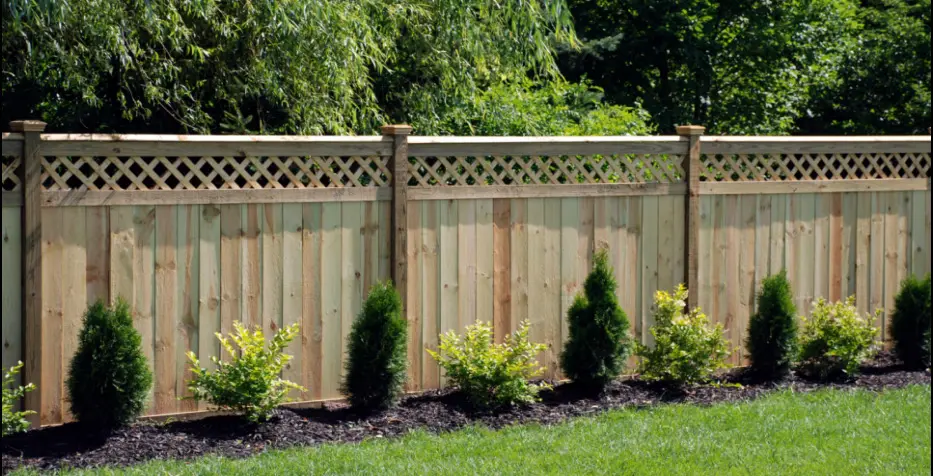
Why do fence permits get refused?
A fence permit is a zoning check. The city is asking three questions: is the fence on your land, is it the height allowed where it stands, and does it get in anyone's way, drivers, utilities, drainage. A refusal almost always means one of those answers is no, or that the site plan did not show the answer at all.
Height that does not match the yard
Height limits change with the yard, and the front yard is the strictest.
| City | Front yard limit | Side and rear limit |
|---|---|---|
| Cleveland Heights, Ohio | 4 ft in the primary front yard | 6 ft[1] |
| Waverly, Iowa | 3 ft | 6 ft[3] |
| Duluth, Minnesota | 4 ft, or 6 ft if ornamental and at least 50% open | 8 ft[2] |
Three height traps catch people who checked the main numbers:
- Corner lots have two front yards. Duluth applies front yard standards to both frontages[2]. Waverly says a fence between the house and the curb on a corner lot may be limited to 3 feet depending on how the house faces[3].
- Next to a house. In Cleveland Heights, a fence beside a house, a neighbor's included, can be no taller than its distance from that house, and residential fences must stay at least 3 feet from a parallel garage[1].
- Sight areas. San Diego limits fences in visibility areas to 3 feet[4], so drivers can see around a corner or out of a driveway.
A line that crosses someone else's land
The fence line is checked against three boundaries.
The right of way. Duluth requires fences to be at least 3 feet from a street or alley right of way, and warns that the right of way often extends into the front yard beyond the sidewalk or curb[2].
Easements. Waverly allows no structure within a utility or drainage easement, and its staff review each fence for proximity to city services and compliance with recorded easements[3]. Duluth bars fences from drainage easements and floodways[2].
The property line. Waverly makes finding the property pins the owner's job[3]. A fence built on the wrong line is a dispute with your neighbor, and the permit does not settle it for you.
Banned materials
Zoning codes ban some materials, usually in front yards. Cleveland Heights prohibits barbed wire everywhere and chain link or wire mesh in front yards[1]. Duluth prohibits chain link, electrically charged, barbed or razor wire and temporary plastic snow fencing in front yards, but may allow a durable vinyl-coated chain link fence up to 4 feet with a permit[2]. A plan that lists the wrong material for a yard is refused even if the height is right.
A design review you did not know about
Some cities send certain fences to a board before the permit. In Cleveland Heights, a fence in a front yard or on a corner lot needs Architectural Board of Review approval before the permit can be issued, even to replace an existing fence[1]. A fence parallel to and visible from the street and longer than 10 feet also needs a landscaping plan[1]. Skip the board and the permit waits.
Tall or masonry fences built without a design
Height can push a fence out of the simple permit. Duluth requires both a fence permit and a building permit for a fence taller than 7 feet[2]. San Diego requires fences that are not exempt from permitting to be designed by a registered design professional licensed in California, submitted with plans and structural calculations[4]. Cleveland Heights handles masonry and stone walls with a building permit rather than a fence permit[1].
Pool barriers that fail the pool rules
A fence around a pool is judged as a safety barrier. Parkland, Florida, applies Florida Building Code rules that limit gaps between vertical members to 4 inches where horizontal members are 45 inches or more apart, require self-closing, self-latching gates that open outward from the pool, and allow no opening larger than 1/2 inch within 18 inches of the latch release[5]. A decorative fence that is fine elsewhere can fail all three.
The HOA said no
The city does not enforce your homeowners association, and the association does not follow the city. Milpitas, California, states that on a property regulated by an association, any exterior work must have the association's approval, and that getting it is the owner's responsibility[7]. Check both before ordering material.
After a refusal
You have two paths. Change the fence, lower it, move it, open it up, or change the material, and resubmit. Or ask for a variance, which is a separate request with a fee: Canandaigua, New York, charges $100 for an area variance in 2026[6]. Building first and asking later is the worst option: Wenatchee, Washington, charges an investigation fee of $500 or triple the permit fee, whichever is greater, for work started without a required permit, on top of the permit fee[8].
How to get it right the first time
Draw the fence on a real site plan: the property line, the right of way, the easements, each yard and its height limit, the corner sight area, the material, and the pool barrier details if there is a pool. That is the file our permit team prepares for your address, with each zoning rule and its link. The All-in offer adds our review before you file and every round of city comments until the permit is issued.
Common questions
Why was my front yard fence refused?
Front yards have the lowest limits. Cleveland Heights, Ohio, allows 4 feet in the primary front yard and Waverly, Iowa, 3 feet. A 6-foot privacy fence that is fine in the back yard exceeds both limits in front.
What is a sight triangle or visibility area?
An area near a street corner or driveway where fences must stay low so drivers can see. In San Diego, California, fences in visibility areas cannot exceed 3 feet.
The city says my fence is in the right of way. How?
The public right of way often extends past the sidewalk or curb into what looks like your front yard. Duluth, Minnesota, requires fences to stay at least 3 feet from a street or alley right of way and warns about exactly this.
Can I appeal a fence refusal?
You can usually ask for a variance, a separate request with its own fee. Canandaigua, New York, charges $100 for an area variance in 2026. Approval is decided case by case.
We handle the permit. You build your fence.
- Your city's rule, for your addressThe code section, its link and the date we checked it.
- Site plan and dimensioned drawingsDistances to your property lines, ready for the application.
- The form, where to file it, and the published feePlus the documents list and an HOA request template.
- Reviewed, then revised until approvedWith All-in, after every comment from the city, for up to 6 months.
Sources
- City of Cleveland Heights, Ohio, Fence permitting information (updated August 2025). Checked October 13, 2026.
- City of Duluth, Minnesota, Fence Permits. Checked October 13, 2026.
- City of Waverly, Iowa, Fence Permit, residential fence regulations. Checked October 13, 2026.
- City of San Diego, California, Development Services, Information Bulletin 222, Prescriptive designs for fences. Checked October 13, 2026.
- City of Parkland, Florida, Wood fence requirements per the Florida Building Code and pool barrier sections. Checked October 13, 2026.
- City of Canandaigua, New York, Fee Schedule 2026. Checked October 13, 2026.
- City of Milpitas, California, Residential Garage Conversion plan requirements (12/02/24), homeowners association note. Checked October 13, 2026.
- City of Wenatchee, Washington, Municipal Code Chapter 2.06, Investigation fees for work without a permit. Checked October 13, 2026.