Greenhouse permits, explained
A small detached greenhouse can be exempt: the International Residential Code exempts one-story detached accessory structures up to 200 square feet. Many places set a lower line or require a permit for any greenhouse, and electricity, plumbing or a location in a required yard bring their own approvals. Check your city before you buy a kit.
Updated
Rather not do this yourself? We prepare your greenhouse permit file for your address, and revise it until approved.
Get my permit · $399Key facts
- The International Residential Code (IRC), Section R105.2, exempts one-story detached accessory structures whose floor area does not exceed 200 square feet.[1]City of Federal Way, Washington, Residential permit exemptions
- New York City shows the difference in filing: a detached residential greenhouse is a New Building application with a separate building identification number, an attached one may be filed as a Renovation application, and a rooftop greenhouse is treated as an additional story.[3]New York City Department of Buildings, Project Categories, Installation of a New…
- Humboldt County's exemption allows no more than two hose bibs, two light fixtures, two electrical outlets and a maximum 100-amp subpanel, with no separate electrical service, and the application must include a plot plan and a floor plan showing the electrical and plumbing layouts.[4]County of Humboldt, California, Planning and Building Department, Residential…
- Park Forest asks for the building permit application, a plat of survey showing where the greenhouse will be, the contractor's signed proposal or a homeowner waiver, and the fee.[2]Village of Park Forest, Illinois, Building Department, Accessory Structures,…
- Germantown also warns that one project can carry several fees at once, such as plan review, zoning and separate mechanical, electrical and plumbing permits.[7]Village of Germantown, Wisconsin, Building Inspection Services, Permit Application and…
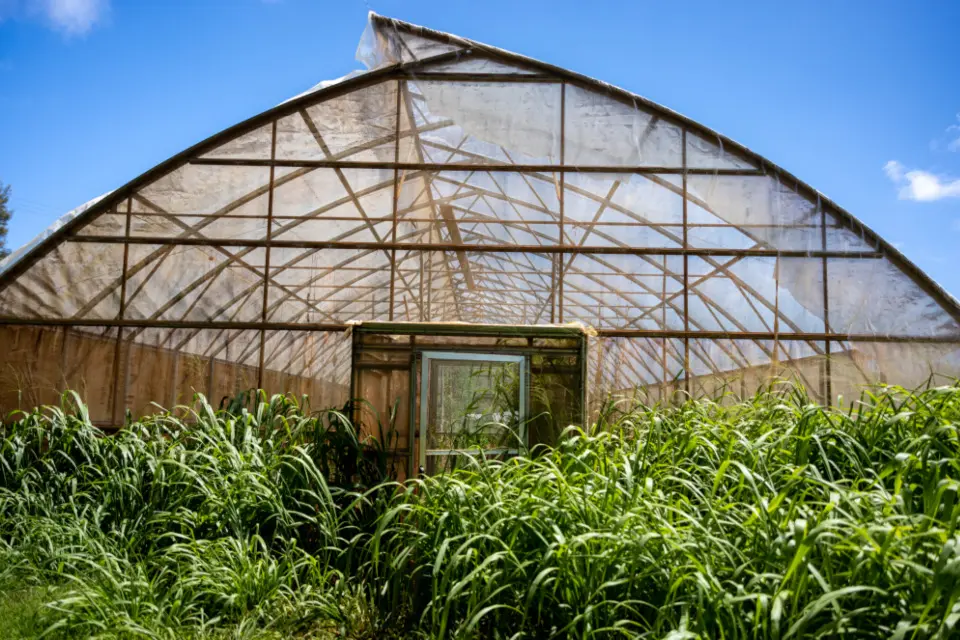
Do you need a permit for a greenhouse?
Start with the model rule, then check how your city changed it. The International Residential Code (IRC), Section R105.2, exempts one-story detached accessory structures whose floor area does not exceed 200 square feet[1]. A freestanding hobby greenhouse under that size is exempt from the building permit in a city that keeps the rule as written. Even there, Federal Way, Washington, which publishes the list, says separate permits may still be required for exempted items, and that work in critical areas such as wetlands, streams or landslide hazard areas is not exempt[1].
The University of Georgia Extension, in its guide to hobby greenhouses, puts it plainly: usually a building permit is required to erect a greenhouse, and plumbing and electrical work should be done by professionals in accordance with local codes[6].
How cities draw the line
The 200 square foot rule is a starting point, not a national answer. Here is how five real jurisdictions handle a backyard greenhouse:
| Place | Rule for a backyard greenhouse |
|---|---|
| Model IRC, as published by Federal Way, Washington | Detached, one story, 200 square feet or less: exempt from the building permit[1] |
| Santa Clarita, California | Greenhouses over 120 square feet need a building permit[5] |
| Park Forest, Illinois | A building permit is required to install or replace a greenhouse; 120 square feet maximum in the R-1 to R-4 districts[2] |
| Humboldt County, California | Up to 400 square feet for personal use can be exempt, through an exemption form with plans[4] |
| New York City | A detached greenhouse accessory to a home is filed as a New Building application and gets its own certificate of occupancy[3] |
The same 10 by 14 foot greenhouse, 140 square feet, is exempt under the model code, needs a permit in Santa Clarita, cannot be built at that size in a Park Forest residential district, and can be exempt in Humboldt County.
Attached or freestanding
The model exemption only covers detached accessory structures[1], so a greenhouse built against the house is treated as work on the house itself. New York City shows the difference in filing: a detached residential greenhouse is a New Building application with a separate building identification number, an attached one may be filed as a Renovation application, and a rooftop greenhouse is treated as an additional story[3].
Utilities change everything
Heat, fans, lights and water are what turn a simple greenhouse into a permit file. Humboldt County's exemption allows no more than two hose bibs, two light fixtures, two electrical outlets and a maximum 100-amp subpanel, with no separate electrical service, and the application must include a plot plan and a floor plan showing the electrical and plumbing layouts[4]. New York City lists electrical work among the typical parts of a new greenhouse installation[3].
Zoning: where it can stand and how tall
A building permit exemption never exempts you from zoning. Zoning decides which yard, how close to the lines, and how big:
- Location. Park Forest allows greenhouses in the interior side and rear yards only, at least 5 feet from the rear lot line and 3 feet from an interior side lot line[2].
- Height. Park Forest caps accessory structures at 14 feet[2]. In New York City, a detached greenhouse in the required rear yard is limited to 10 feet above the yard level, an attached one to one story or 15 feet[3].
- Area. In New York City, the greenhouse cannot exceed 25 percent of the required rear yard[3]; in Park Forest residential districts, 120 square feet[2].
- Use and parcel. Humboldt County's exemption covers up to two personal-use greenhouses per legal parcel, accessory to an existing, lawfully constructed residence[4].
What the city asks for
For a permit, expect a drawing of where the greenhouse sits on your lot and of the greenhouse itself. Park Forest asks for the building permit application, a plat of survey showing where the greenhouse will be, the contractor's signed proposal or a homeowner waiver, and the fee[2]. Humboldt County's exemption still asks for a plot plan in four copies, a floor plan in three copies, the dimensions and square footage of each structure, and any grading, electrical and plumbing, existing or proposed[4].
What a greenhouse permit costs
Fees are set locally and published. Two real examples:
| Place | Fee |
|---|---|
| Park Forest, Illinois | $40 from 40 to under 100 square feet; from 100 square feet, by the cost of the job: $60 for $250 to $1,500, $100 for $1,501 to $2,000, then $100 plus $10 per $1,000[2] |
| Germantown, Wisconsin (2026) | $68.77 for a detached accessory structure of 192 square feet or less, pre-made units included[7] |
Germantown also warns that one project can carry several fees at once, such as plan review, zoning and separate mechanical, electrical and plumbing permits[7]. Your permit file lists your own city's fees, with the link to its schedule.
Building without a permit
An unpermitted greenhouse is easy to see from the neighbor's window. In Santa Clarita, a stop work order can be issued for unpermitted construction, and if work continues after it, the property owner is subject to fines and a lien on the property[5]. The All-in offer checks the rule for your address, prepares the drawings and forms, and follows the application until it is approved.
Common questions
How big can a greenhouse be without a permit?
Under the model International Residential Code, a one-story detached accessory structure of 200 square feet or less is exempt from a building permit. Your city can set a lower line, such as 120 square feet in Santa Clarita, California, or require a permit for every greenhouse, as Park Forest, Illinois, does.
Does a greenhouse kit need a permit?
A kit is treated like any other structure of the same size. In Park Forest, Illinois, a building permit is required for the installation or replacement of a greenhouse, with a plat of survey showing where it will stand.
Do I need a permit to run electricity to my greenhouse?
Usually yes, even when the structure itself is exempt. Humboldt County, California, keeps its greenhouse exemption only up to two hose bibs, two light fixtures, two outlets and a 100-amp subpanel, and asks for the electrical and plumbing layouts.
Can a greenhouse go in my backyard setback?
Sometimes, within limits. New York City treats a non-commercial greenhouse accessory to a home as a permitted obstruction in the required rear yard, but a detached one is limited to 10 feet in height and to 25 percent of the required rear yard.
We handle the permit. You build your greenhouse.
- Your city's rule, for your addressThe code section, its link and the date we checked it.
- Site plan and dimensioned drawingsDistances to your property lines, ready for the application.
- The form, where to file it, and the published feePlus the documents list and an HOA request template.
- Reviewed, then revised until approvedWith All-in, after every comment from the city, for up to 6 months.
Sources
- City of Federal Way, Washington, Residential permit exemptions (International Residential Code, Section R105.2). Checked October 13, 2026.
- Village of Park Forest, Illinois, Building Department, Accessory Structures, Greenhouse or Shed (Chapter 118, rev. 3-2018). Checked October 13, 2026.
- New York City Department of Buildings, Project Categories, Installation of a New Greenhouse, Grade Level and Rooftop. Checked October 13, 2026.
- County of Humboldt, California, Planning and Building Department, Residential Accessory Greenhouse Exemption Form (revised 10/2/2020). Checked October 13, 2026.
- City of Santa Clarita, California, Building and Safety, Stop Work Order Information. Checked October 13, 2026.
- University of Georgia Cooperative Extension, Bulletin 910, Hobby Greenhouses (minor revisions November 17, 2023). Checked October 13, 2026.
- Village of Germantown, Wisconsin, Building Inspection Services, Permit Application and Inspection Fees and Charges 2026. Checked October 13, 2026.