ADU permits, explained
An accessory dwelling unit always needs a permit, because it is a home: Seattle says an ADU is not legal unless it has been established through a permit process. Expect a zoning check of your lot, a full set of construction drawings, plan review and impact or utility fees, inspections during the work and a certificate of occupancy at the end.
Updated
Want us to prepare it? ADU (accessory dwelling unit) permits are prepared on quote.
Get a quoteKey facts
- ADUs are not legal unless they have been established through a permit process, whether the unit is inside the house or detached in the yard.[1]City of Seattle, Construction and Inspections, Accessory Dwelling Unit
- Moab, Utah, lists three types: an external ADU, an internal ADU, and an internal ADU that requires an owner-occupied primary dwelling.[4]City of Moab, Utah, ADU Process Flow Chart and Due Diligence Worksheet
- Austin reminds applicants that some properties have deed restrictions or restrictive covenants, and that checking them is the applicant's responsibility.[2]City of Austin, Texas, Development Services, Additional Dwelling Units
- The Alameda County ADU Resource Center lists what applications typically include: A site plan with the existing and proposed structures; Architectural plans: floor plans, elevations and details; Structural plans: foundation plan, framing plans and details; Other items, such as Title 24 energy calculations in California, a deed restriction or an address assignment form.[3]Alameda County, California, ADU Resource Center, Permit
- In New York City, legalizing unpermitted work on a one- or two-family home carries a $600 civil penalty, and removing the work instead carries the same penalty.[6]New York City Department of Buildings, Form L2 instructions, civil penalties for work…
Does an ADU need a permit?
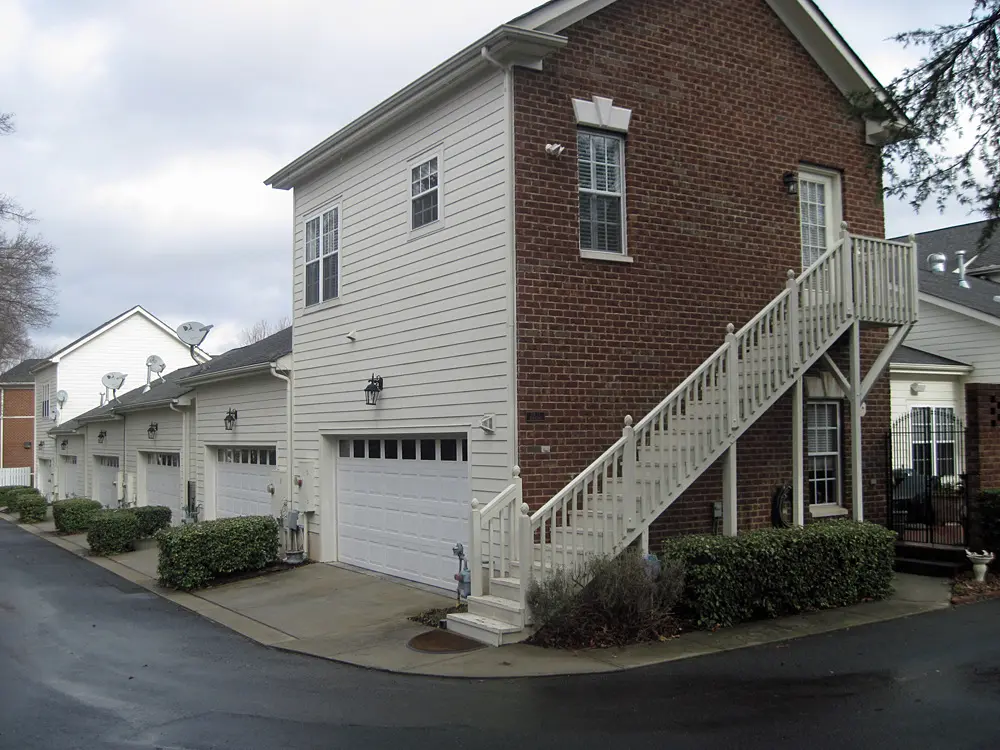
Always. An accessory dwelling unit is a second home on your lot, and cities regulate it as one. Seattle says it plainly: ADUs are not legal unless they have been established through a permit process, whether the unit is inside the house or detached in the yard[1]. Austin, Texas, defines a dwelling unit as any structure or part of one with a habitable space, a full bathroom and permanent cooking facilities, and applies to it the rules for dwelling units, including zoning, utility meter, internal access, occupancy and address requirements[2].
That definition is why a finished basement or a garage studio can become an ADU without anyone planning it. Monticello, Minnesota, says creating a full kitchen in the basement of a single-family home must be reviewed for zoning[5].
Attached, detached or converted
The kind of ADU changes the permit. Seattle calls a legally permitted unit inside the home an attached accessory dwelling unit (AADU) and a unit elsewhere on the property a detached accessory dwelling unit (DADU)[1]. Adding a unit within the house and building a detached one both take a construction addition or alteration permit there, while legalizing an existing unit takes a construction permit to establish use[1].
Tiny houses sit on a line too. In Seattle, a tiny house on wheels is treated like a camper trailer and cannot be lived in on a lot within city limits, while a tiny house on a foundation is considered a DADU[1]. Moab, Utah, lists three types: an external ADU, an internal ADU, and an internal ADU that requires an owner-occupied primary dwelling[4].
Can you build one on your lot?
Each city decides where ADUs are allowed, and the rules are very different from one place to the next:
| Where | Who can build one | Notable rules | Source |
|---|---|---|---|
| Austin, Texas | Lots zoned SF-1, SF-2 or SF-3 | Lot of at least 5,750 sq ft; size set by zoning district and location; IRC fire separation between units; a unique address for the new unit | [2] |
| Seattle, Washington | Residential lots, within the zone's height and location standards | At most two of the units on a lot may be ADUs; no parking requirement; must meet current Seattle codes | [1] |
| Moab, Utah | Zones RA-1, R-1, R-2, R-3 and R-4 | Check setbacks, height, lot coverage and floodplain first; a deed restriction is recorded | [4] |
| Alameda County, California | Rules vary by city; a local rules summary is published | State law limits comments on pre-existing zoning issues unrelated to the ADU | [3] |
Private rules matter as well. Austin reminds applicants that some properties have deed restrictions or restrictive covenants, and that checking them is the applicant's responsibility[2]. Moab's worksheet asks whether there is an HOA and recorded CC&Rs[4].
What the application includes
An ADU permit is a full building permit. The Alameda County ADU Resource Center lists what applications typically include[3]:
- A site plan with the existing and proposed structures.
- Architectural plans: floor plans, elevations and details.
- Structural plans: foundation plan, framing plans and details.
- Other items, such as Title 24 energy calculations in California, a deed restriction or an address assignment form.
Austin sets out the order in seven steps: confirm the lot qualifies, request a new address, apply for the building permit, pay the plan review fees and complete the review, pay and activate the permits, build with inspections, and receive the certificate of occupancy after the final inspection[2]. In Moab, the path also includes a floodplain development application when the lot is in a floodplain, city impact fees and drainage impact fees, and recording the deed restriction during construction[4].
What it costs in fees
ADU fees come from several bodies, not one. Alameda County lists planning, plan check and building permit fees, other department fees, school district fees for ADUs over 500 square feet, development impact fees for ADUs over 750 square feet, and utility and sanitation fees, and notes that many of the most expensive fees, like school and water fees, are set by other agencies[3].
Moab, Utah, publishes an estimate for an external ADU[4]:
| Moab estimate | 700 sq ft (valuation $116k) | 1,000 sq ft (valuation $166k) |
|---|---|---|
| Impact fees | $3,000 | $3,000 |
| Building permit application fee | $1,500 | $1,850 |
| Approximate total | $4,500 | $4,850 |
Moab says actual permit fees vary by square footage and type of ADU[4]. In Seattle, every ADU permit is reported to King County for sewer treatment capacity charges, and you sign a form acknowledging them with the application[1]. Alameda County adds that some places require homeowners to upsize water or sewer service or meters[3].
How long it takes
The Alameda County ADU Resource Center says the permitting phase typically takes 1 to 6 months, and that most ADU projects take 12 to 18 months from start to finish, some 24 months or more[3]. Local staff review the application and provide comments within 60 days there, and must give a full set of comments with a list of incorrect items and how to fix them[3].
Pre-approved plans are the fast lane where they exist. Seattle's ADUniverse site has a gallery of pre-approved detached ADU designs, and Seattle says that in most cases you can get the permit in 2 to 6 weeks with one[1].
Once issued, keep the work moving. In Austin, an active permit expires on the 181st day if no inspection has been scheduled or received, and each inspection extends it by 180 days[2].
Renting the ADU
The permit is also what lets you rent the unit legally. In Austin, a short-term rental license application needs the ADU's certificate of occupancy, and an ADU built after October 1, 2015, may not be used as a short-term rental for more than 30 days in a calendar year[2]. In Moab, rental of external and internal ADUs is restricted to active employment households[4].
An existing unit without a permit
Many ADUs already exist without one. Seattle has a dedicated path: legalizing an existing unit takes a construction permit to establish use[1]. Legalizing has a cost beyond the permit itself: in New York City, legalizing unpermitted work on a one- or two-family home carries a $600 civil penalty, and removing the work instead carries the same penalty[6].
How we handle ADUs
An ADU is a large project: it needs construction drawings, often structural plans and energy calculations, prepared by the licensed professionals your city requires. We are not architects or engineers. ADUs are therefore quoted case by case rather than sold at the All-in price. Describe your lot and your project on the quote form: we read your city's ADU rules for your address and tell you what we can prepare for the permit file, and what needs a licensed designer, before you commit to anything.
Common questions
What counts as an ADU?
Austin, Texas, treats a structure or part of one as a dwelling unit when it has a habitable space, a full bathroom and permanent cooking facilities. Seattle calls a unit inside the house an attached ADU and a unit elsewhere on the lot a detached ADU.
How long does an ADU permit take?
It depends on the city and on the plans. The Alameda County ADU Resource Center says the permitting phase typically takes 1 to 6 months, and that most ADU projects take 12 to 18 months to complete. Seattle says pre-approved detached ADU plans can usually be permitted in 2 to 6 weeks.
How much are ADU permit fees?
There is no single figure. Moab, Utah, publishes an estimate of about $4,500 for a 700-square-foot external ADU and $4,850 for 1,000 square feet, in impact and building permit fees, and says actual fees vary. In Alameda County, school fees apply above 500 square feet and development impact fees above 750 square feet.
Can I rent my ADU on Airbnb?
Check your city first. In Austin, an ADU built after October 1, 2015, may not be used as a short-term rental for more than 30 days in a calendar year, and the license application needs the unit's certificate of occupancy. In Moab, Utah, rental of external and internal ADUs is restricted to active employment households.
Do you draw the ADU plans?
An ADU needs a full set of construction drawings, often with structural plans and energy calculations. We are not architects or engineers. ADUs are quoted case by case: describe your lot and project on the quote form, and we tell you what we can prepare for the permit file and what needs a licensed designer.
Let us prepare your adu (accessory dwelling unit) permit
We research the rules that apply at your address and tell you exactly what your city needs before you commit to anything.
Sources
- City of Seattle, Construction and Inspections, Accessory Dwelling Unit. Checked October 13, 2026.
- City of Austin, Texas, Development Services, Additional Dwelling Units. Checked October 13, 2026.
- Alameda County, California, ADU Resource Center, Permit. Checked October 13, 2026.
- City of Moab, Utah, ADU Process Flow Chart and Due Diligence Worksheet. Checked October 13, 2026.
- City of Monticello, Minnesota, Building Safety Department, Basement Finishing Guide. Checked October 13, 2026.
- New York City Department of Buildings, Form L2 instructions, civil penalties for work without a permit (rev. 03/2026). Checked October 13, 2026.