I want to build a detached garage in Maryland. What permit do I need?
You need a building permit from your county, or from your town if it runs its own permit office. Maryland applies one statewide building code, but each county issues permits and may amend it. Frederick County exempts only accessory structures under 150 square feet, Baltimore County only those of 120 square feet or less, and Montgomery County lists garages among the projects that will likely need a permit.
Published · Updated
Editorial lead: The YesPermit team
Rather not do this yourself? We prepare your permit file for your address, and revise it until approved.
Get my permit · $499Key facts
- Maryland requires every jurisdiction to use the same edition of the International Building Code, International Residential Code and International Energy Conservation Code, and lets each jurisdiction modify them, except the energy and accessibility codes.[1]Maryland Department of Labor, Building Codes Administration, Maryland Building Codes
- In Frederick County, Maryland, residential accessory structures under 150 square feet need no building permit; a garage or pole building permit costs $327 in county fees, plus $75 when the lot has a well or septic system.[2]Frederick County, Maryland, Division of Planning and Permitting, Residential Building…
- In Frederick County, a residentially zoned lot outside an incorporated town may have an accessory structure of 600 square feet of footprint or less, or half of the house footprint.[2]Frederick County, Maryland, Division of Planning and Permitting, Residential Building…
- Montgomery County, Maryland, lists garages, sheds and accessory structures among the projects for which you will likely need a permit.[3]Montgomery County, Maryland, Department of Permitting Services, A Guide to Building…
- In Montgomery County, an accessory building over 200 square feet costs $0.88305 per square foot, plus a filing fee of half the permit fee or $329.59, whichever is greater (fiscal year 2027).[4]Montgomery County, Maryland, Department of Permitting Services, Residential Building Fees
- Baltimore County, Maryland, requires a building permit for accessory structures greater than 120 square feet and keeps them in the rear yard, 15 feet high at most.[5]Baltimore County, Maryland, Department of Permits, Approvals and Inspections,…
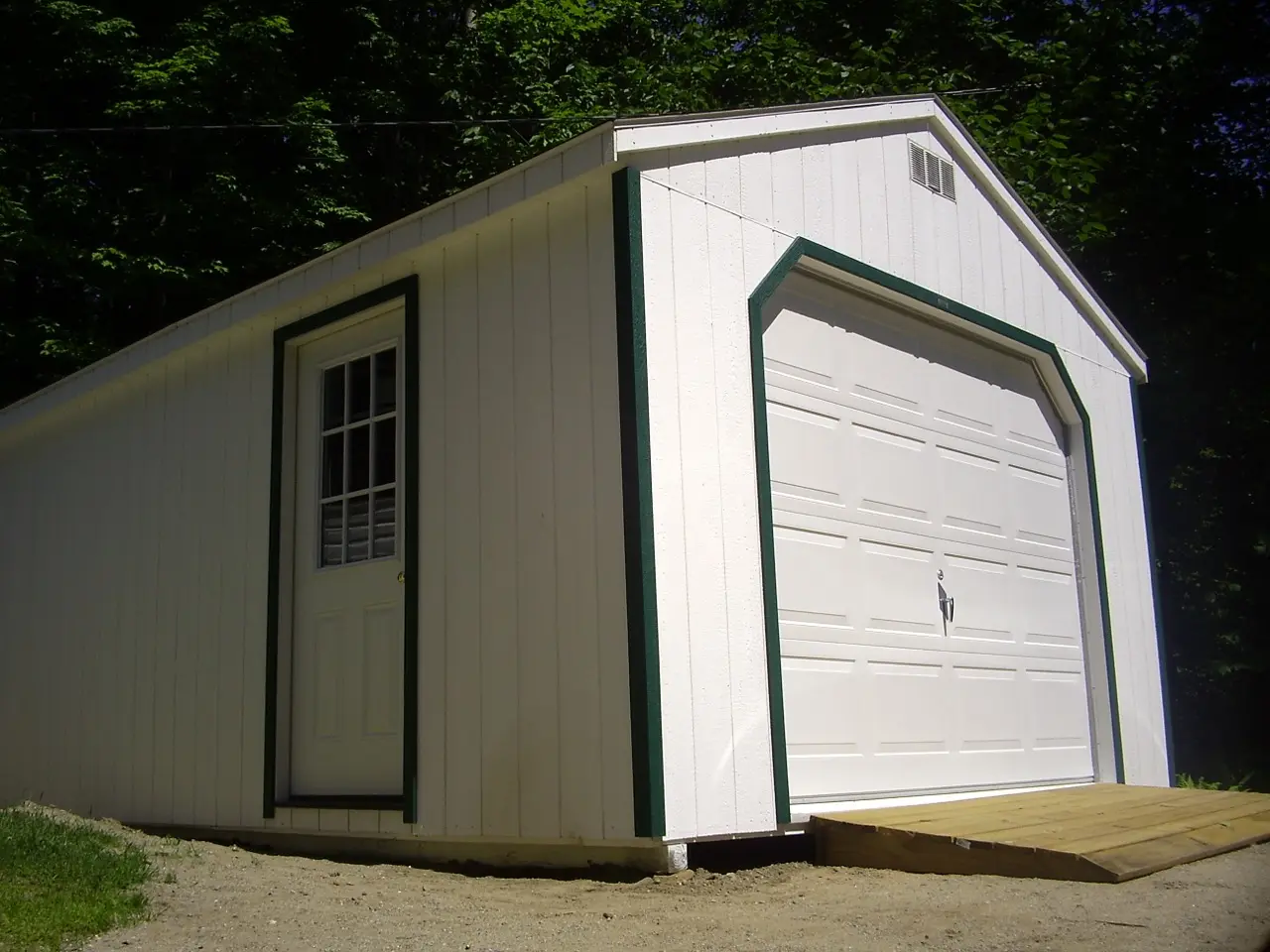
Do you need a permit for a detached garage in Maryland?
Yes, plan on one. Maryland's building law, the Maryland Building Performance Standards, requires each jurisdiction in the state to use the same edition of the International Building Code, the International Residential Code and the International Energy Conservation Code, with state modifications[1]. Each local jurisdiction may then modify these codes to suit local conditions, except the energy code and the accessibility code, which can only be made stricter[1]. So the answer to "do I need a permit" comes from your county, not from Annapolis.
Three counties put it in writing:
- In Frederick County, Maryland, residential accessory structures less than 150 square feet do not require a building permit[2]. A garage is well above that size.
- Baltimore County requires a building permit for accessory structures greater than 120 square feet, and for all of them, whatever their size, in the floodplain, the Chesapeake Bay Critical Area, a historic district or on the county Landmarks List[5].
- Montgomery County, Maryland, lists garages, sheds and accessory structures among the projects for which you will likely need a permit, and adds that work exempt from permits must still meet the building code and other local laws[3].
The Maryland Department of Labor itself tells homeowners to contact their local jurisdiction for its current building code information, because local ordinances change[1].
Who issues the permit: county or town?
The county, in most cases. But if your lot is inside an incorporated town, the town comes first. In Frederick County, when a property is within an incorporated town, paperwork from the town is required before a permit application may be submitted, and the town may require a zoning certificate[2]. Montgomery County's permit guide warns that its list does not include municipality and homeowner association rules, and asks residents of a municipality or an HOA to check those rules too[3]. An HOA approval is a separate step from the county permit: see HOA approval vs. city permit.
How big can a detached garage be?
Zoning decides, lot by lot. In Frederick County, on a residentially zoned property outside an incorporated town, an accessory structure may be 600 square feet of footprint or less, or half of the footprint of the house, under the zoning regulations[2]. Residential accessory structures may not be placed in the required front yard there[2]. Two other counties publish their own numbers:
| Montgomery County (R-60 zone) | Baltimore County | |
|---|---|---|
| Size cap | 600 sq ft or 50% of the house footprint, whichever is greater; lot coverage 35% with accessory buildings[6] | No more than 40% of the yard[5] |
| Where | Rear yard only, 60 ft from the front line[6] | Rear yard, behind the rear foundation wall line, unless a zoning variance is obtained[5] |
| Side and rear setbacks | 5 ft; more when the garage is longer than 24 ft along a line or taller than 15 ft[6] | 2.5 ft; a one-hour fire-rated wall with no openings on any side closer than 5 ft[5] |
| Height | 20 ft to the highest point of the roof[6] | 15 ft[5] |
Baltimore County also asks for frost-line footings above 400 square feet, and construction plans at 1,000 square feet and over[5]. Your setbacks come from your zoning district: read setbacks explained before you choose the spot.
What Frederick, Montgomery and Carroll counties each publish on size, setbacks, height, frost depth and fees, with the arithmetic for a sample lot, is in our Detached Garage Permit Plans (PDF).
What the county asks for
Frederick County's packet for additions, alterations and accessory structures lists what goes into the application[2]:
| Document | What it must show |
|---|---|
| Plot plan | All property lines and their dimensions, lot size, building restriction lines and utility easements, north arrow, scale, owner name and address, the house and every existing structure, the existing well, septic area and driveway, and the new garage with its distances to the property lines or the nearest structure in each direction |
| Construction plans | Drawn to an appropriate scale, describing the design, location and physical characteristics of the project, per the county's plan review checklists |
| Town paperwork | Required first when the lot is in an incorporated town |
The county asks for a legal survey as the base of the plot plan "when at all possible"; otherwise a hand drawing is accepted if it is legible and drawn to scale[2]. The plot plan and the drawings are where most first submissions fall short: see permit drawings.
What it costs: Frederick, Montgomery and Baltimore County
Fees are set by each county, so the same garage costs a different amount across a county line.
Frederick County. Frederick County publishes its fees for a garage or pole building permit[2]:
| Fee | Amount |
|---|---|
| Automation enhancement fee | $11 |
| Filing fee | $33 |
| Building fee | $226 |
| Zoning review fee | $57 |
| Total | $327 |
| Health review fee, if the property is served by a well or septic system | $75 more |
Montgomery County. The county charges $0.88305 per square foot for an accessory building greater than 201 square feet, plus a filing fee of 50% of the permit fee or $329.59, whichever is greater, under its schedule for July 1, 2026 to June 30, 2027[4]. For a 24 x 24 ft garage (576 square feet), as an example:
| Fee | Amount |
|---|---|
| Accessory building, 576 x $0.88305 | $508.64 |
| Filing fee: the greater of $254.32 (50%) and $329.59 | $329.59 |
| Total | $838.23 |
Baltimore County. The county's published schedule, effective 11/26/18, charges $85 for accessory structures up to 1,000 square feet and $130 over 1,000 square feet where construction plans are required, with no refunds[7]. Since plans are only asked for at 1,000 square feet and over[5], ask the county for the amount on a smaller garage. Its accessory structure page also says a licensed Maryland Home Improvement Commission contractor must be used[5].
Electrical and plumbing permits are separate permits with separate fees in Frederick County[2]. Filing fees are non-refundable, and a revision fee is charged for resubmissions or amendments[2], which is one more reason to file a complete application the first time.
How long it takes
In Frederick County, an application may be processed as a walk-through permit, accepted, reviewed and issued the same day, when the property is not served by a private well or septic system and is not within an incorporated town[2]. Otherwise, plan review takes one week for its initial comments on this type of application[2]. The county also runs an expedited residential process meant to issue certain permits within one business day; it lists a one-story garage with a truss roof among eligible projects, but excludes pole building construction[8].
An application is deemed abandoned 180 days after filing unless it is pursued in good faith or a permit has been issued[2].
Who can apply?
In Frederick County, the property owner, a contractor licensed by the Maryland Home Improvement Commission, a design professional, or the owner's agent may apply; an agent who is not a licensed contractor or design professional must present a notarized form[8]. If you build it yourself, read owner-builder permits first.

Step by step
Find out who issues your permit
Check whether your lot is inside an incorporated town. If it is, start with the town's zoning approval, then the county permit[2].
Check the zoning limits for your lot
Find the size cap, the setbacks and the yards where an accessory building may stand. In Frederick County, that means 600 square feet of footprint or half of the house footprint on a residential lot, and never in the required front yard[2].
Draw the plot plan
Put every line the county lists on it: property lines, building restriction lines, easements, existing structures, well and septic, driveway, and the garage's distance to the lot lines in each direction[2].
Prepare the construction drawings
Draw the garage to scale, labeled and dimensioned. Frederick County asks for a complete set of construction plans in PDF for an expedited application[8].
Apply and pay
Frederick County takes applications electronically through its citizen portal, and plan review does not begin until the application fees are paid[8].
Pass the inspections
Inspections are requested and tracked through the portal, and the permit ends with a certificate of completion once all final inspections are approved[2].
Want the file prepared for your address?
The county explains the rules; it does not draw your plot plan or check your setbacks for you. That is the part we prepare. The Permit Kit ($349) gives you your county's rule for your address, sourced, a site plan with the distances to your property lines, dimensioned garage drawings for the application, the documents list, the form and where to file it, and the published fees. With Kit + Expert Review ($399), we check your complete file before you submit it. With All-in ($499), we revise the file after every county comment until the permit is approved, or you get your money back. The county decides on every permit.
- Permit Kit$349
- Kit + Review$399
- All-in$499
Your permit file, prepared for your address
We handle the permit. You build your project.
- Your city's rule, for your addressThe code section, its link and the date we checked it.
- Site plan and dimensioned drawingsDistances to your property lines, ready for the application.
- The form, where to file it, and the published feePlus the documents list and an HOA request template.
- Reviewed, then revised until approvedWith All-in, after every comment from the city, for up to 6 months.
Common questions
Do I need a permit for a detached garage in Maryland?
Yes, plan on one. Maryland applies one statewide building code, but your county, or your town if it runs its own permit office, issues the permit. Frederick County exempts only residential accessory structures under 150 square feet, Baltimore County only those of 120 square feet or less, and Montgomery County lists garages among the projects that will likely need a permit.
How much does a detached garage permit cost in Maryland?
It depends on the county. Frederick County charges $327 for a garage or pole building, plus $75 with a well or septic system. In Montgomery County, a 24 x 24 ft garage works out to $508.64 plus the $329.59 minimum filing fee, $838.23 in all, under the fiscal year 2027 schedule.
What are the setback requirements for a detached garage in Maryland?
There is no single statewide number. Setbacks come from the zoning district of your county or town. In Montgomery County's R-60 zone, an accessory building goes in the rear yard only, 5 feet from the side and rear lines. In Baltimore County, it stands behind the rear foundation wall, 2.5 feet from the side and rear lines, with a one-hour fire-rated wall on any side closer than 5 feet. In Frederick County, it may not be placed in the required front yard.
Do I need a garage permit in Baltimore County?
Yes, for any accessory structure greater than 120 square feet, and for every accessory structure in the floodplain, the Chesapeake Bay Critical Area, a historic district or on the county Landmarks List. Construction plans are asked for at 1,000 square feet and over.
Do I need a permit for a garage in Maryland if it has no electricity?
Yes, the building permit is about the structure. In Frederick County, only residential accessory structures under 150 square feet are exempt, and electrical work, if you add it later, needs its own separate permit.
Is a pole barn treated like a garage?
In Frederick County, a garage and a pole building fall under the same permit fee line, $327 in county fees. The expedited one-day process does not cover pole building construction.
Can I build the garage in my front yard?
Not in the required front yard in Frederick County. Elsewhere, check your county's zoning for your district.
What if my lot has a well or septic system?
Expect an extra health review. Frederick County charges $75 for it, and a property served by a well or septic system cannot use the same-day walk-through process.
- Permit Kit$349
- Kit + Review$399
- All-in$499
Your permit file, prepared for your address
We handle the permit. You build your project.
- Your city's rule, for your addressThe code section, its link and the date we checked it.
- Site plan and dimensioned drawingsDistances to your property lines, ready for the application.
- The form, where to file it, and the published feePlus the documents list and an HOA request template.
- Reviewed, then revised until approvedWith All-in, after every comment from the city, for up to 6 months.
Rather hire a contractor to build it?Tell us about the job: we pass your request to partner contractors in your area. No cost to ask, no obligation to hire.
Sources
- Maryland Department of Labor, Building Codes Administration, Maryland Building Codes (Maryland Building Performance Standards). Checked October 22, 2026.
- Frederick County, Maryland, Division of Planning and Permitting, Residential Building Permit Information, Addition, Alteration & Accessory (07/2026). Checked October 22, 2026.
- Montgomery County, Maryland, Department of Permitting Services, A Guide to Building Permits and Home Improvements, Permits Required / No Permits Required (2024). Checked October 22, 2026.
- Montgomery County, Maryland, Department of Permitting Services, Residential Building Fees (effective July 1, 2026 to June 30, 2027). Checked November 25, 2026.
- Baltimore County, Maryland, Department of Permits, Approvals and Inspections, Residential Accessory Structure Permit (copy of December 2025, read on the Internet Archive; the county site refuses connections from outside the United States). Checked November 11, 2026.
- Montgomery County, Maryland, Department of Permitting Services, Residential 60 Zone (R-60) Standard Method Development Standards (for guidance only). Checked November 25, 2026.
- Baltimore County, Maryland, Building Permit Fee Schedule, effective 11/26/18 (PAI BPP 15, Attachment A; copy of March 2025, read on the Internet Archive). Checked November 11, 2026.
- Frederick County, Maryland, Division of Planning and Permitting, Expedited Permit Process, Residential Uses. Checked October 22, 2026.