Patio permits, explained
It depends on your city more than for almost any other project. An uncovered patio at ground level often needs no building permit: Colton, California, says so outright. But La Grange Park, Illinois, requires a permit for every concrete, asphalt or paver patio, and Stafford Township, New Jersey, requires a zoning permit. Adding a roof always changes the answer.
Updated
Rather not do this yourself? We prepare your patio permit file for your address, and revise it until approved.
Get my permit · $399Key facts
- Lake Stevens counts permeable pavers and other permeable hard surfaces at a 50 percent credit toward the limit.[6]City of Lake Stevens, Washington, Permeable Hard Surface Fact Sheet
- Ann Arbor, Michigan, allows open and unroofed terraces, patios, stoops and steps anywhere on a lot, including inside the setback areas.[7]City of Ann Arbor, Michigan, Ordinance ORD-19-17, amending Section 5.18.1 of the…
- La Grange Park asks for: the building permit application and contractor registration; three copies of a current, legal plat of survey with the work highlighted and dimensioned; the proposal or contract with construction details: material, depth and base; storm water plans sealed by an engineer when adding 250 square feet or more of impervious surface.[3]Village of La Grange Park, Illinois, Driveway, Patio and Walkway Permit application packet
- Wilton Manors routes the permit through building, zoning and public utilities review.[4]City of Wilton Manors, Florida, Community Development Services, Driveway, Walkway,…
- Bloomfield, Connecticut, charges an investigation fee for work without a permit of $250 or the permit fee, whichever is greater.[9]Town of Bloomfield, Connecticut, Building Division Fees
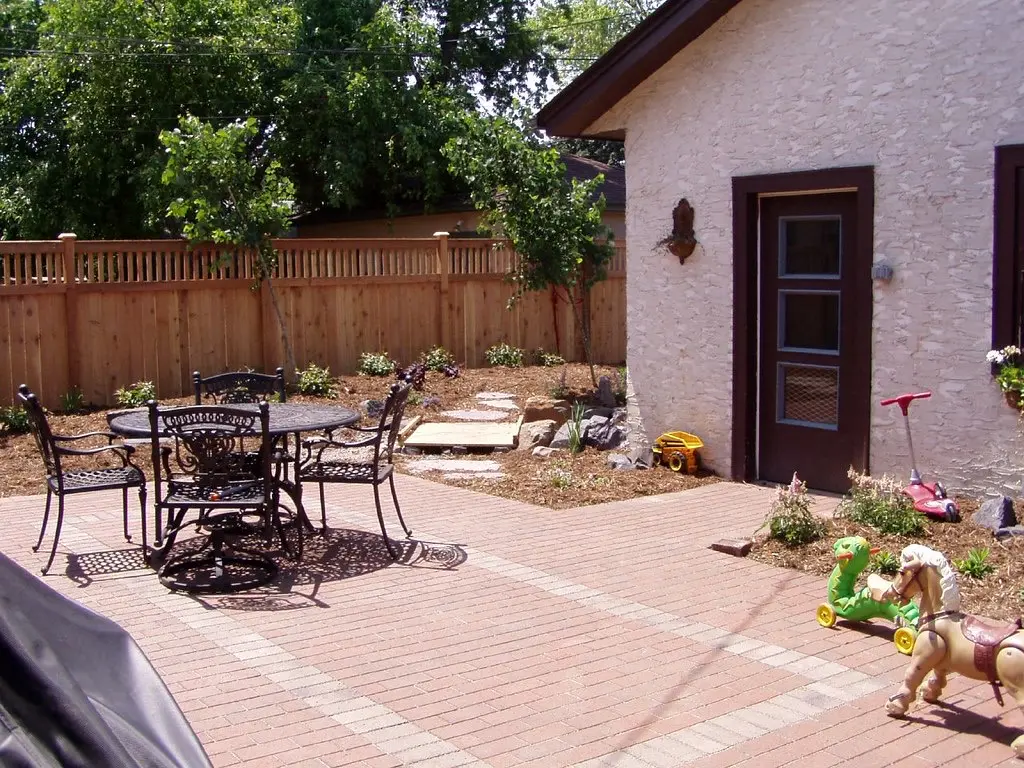
Do you need a permit for a patio?
A patio is the one outdoor project where two neighboring towns can give opposite answers. The reason is that a flat, uncovered slab raises few building code questions, so many building departments leave it alone, while zoning and stormwater rules care a lot about how much of your lot you pave.
| Place | Uncovered patio at grade | Source |
|---|---|---|
| Colton, California | No building permit for a patio slab without an overhead structure | Patio cover handout[1] |
| La Grange Park, Illinois | Permit for all new and replacement concrete, asphalt or brick paver projects | Permit packet[3] |
| Wilton Manors, Florida | Building permit application, survey and impervious area calculation | Permit checklist[4] |
| Stafford Township, New Jersey | Zoning permit for impervious surfaces such as pavers or a concrete patio | Zoning instructions[5] |
| Denver, Colorado | Covered patios need a zoning and a building permit | City page[8] |
The model building code helps explain the split. Its list of work exempt from a building permit, as Federal Way, Washington, publishes it, names sidewalks and driveways, with the note that other code requirements may still apply; patios are not named[2]. Each city decides how to treat them, and many use zoning or stormwater rules instead.
When an "easy" patio needs a permit anyway
Even where a plain slab is exempt, a few details pull a patio back into the permit system:
- A roof. Any overhead structure turns the project into a patio cover. Denver requires both a zoning and a building permit for every covered patio[8].
- Footings for later. In Colton, pouring footings in the slab for a future patio cover requires a foundation-only permit[1].
- A raised platform. Built up off the ground, a patio becomes a deck, and the model code exempts a deck only if it is no more than 30 inches above grade, 200 square feet or less, not attached to the house and not serving the required exit door[2].
- Lots of new paving. In La Grange Park, increasing the impervious surface by 250 square feet or more requires storm water management plans signed and sealed by a licensed Illinois engineer[3].
Impervious surface limits
This is the rule most patio owners never hear about until the permit is refused. Cities cap how much of a lot can be covered by surfaces that keep water from soaking into the ground:
- La Grange Park: no property can exceed a maximum impervious surface coverage of 50 percent[3].
- Lake Stevens, Washington: lots developed before April 1, 2020, may cover 40 percent of the lot with impervious surfaces; newer lots follow the limits of their zoning district[6]. Patios are listed among common impervious surfaces, with roofs, walkways and driveways[6].
- Wilton Manors: the application includes an impervious and pervious space calculation form that adds the house, porches, patios, walkways, slabs, driveways and pool[4].
Permeable materials can help. Lake Stevens counts permeable pavers and other permeable hard surfaces at a 50 percent credit toward the limit[6].
Setbacks
Some codes are generous with open patios. Ann Arbor, Michigan, allows open and unroofed terraces, patios, stoops and steps anywhere on a lot, including inside the setback areas[7]. Stafford Township is stricter: internal walkways and patios must be set back at least three feet from any property line[5]. Put a roof on the patio and it is no longer open and unroofed, so the full setbacks come back.
What the application includes
When a patio does need a permit, the file is short but precise. La Grange Park asks for[3]:
- the building permit application and contractor registration;
- three copies of a current, legal plat of survey with the work highlighted and dimensioned;
- the proposal or contract with construction details: material, depth and base;
- storm water plans sealed by an engineer when adding 250 square feet or more of impervious surface.
Wilton Manors asks for a sealed survey prepared within the last two years, the impervious calculation, the homeowners association's approval if required, and an owner-builder affidavit if the owner does the work[4].
What a patio permit costs
| Place | Patio fee | Source |
|---|---|---|
| La Grange Park, Illinois | 1.5 percent of the construction cost, $100 minimum | Permit packet[3] |
| Stafford Township, New Jersey | $25 zoning permit fee | Zoning instructions[5] |
At La Grange Park's rate, a $12,000 paver patio pays $180; anything up to $6,666 pays the $100 minimum[3]. Engineering fees for storm water review may be billed separately[3].
The inspections
Even a patio can be inspected. La Grange Park requires pre-pour inspections for concrete, base inspections for pavers and asphalt, and a final[3]. Wilton Manors routes the permit through building, zoning and public utilities review[4].
Patio, deck or patio cover?
The word "patio" covers projects that cities treat very differently. A quick way to find the right rules:
| What you are building | Usually reviewed as | Where to look |
|---|---|---|
| Pavers or a slab on the ground, open to the sky | Zoning, impervious surface, sometimes a building permit | This page |
| A wood platform raised off the ground | A deck: the model code exemption stops at 30 inches above grade and 200 square feet[2] | Deck permit |
| A roof over the patio, attached or freestanding | A patio cover: zoning and building permit in Denver[8] | Patio cover permit |
| Footings in the slab for a future roof | A structure: foundation-only permit in Colton[1] | Patio cover permit |
Already built a patio without a permit?
If your town required a permit and you skipped it, the fix is an after-the-fact application, and it usually costs more than the permit would have. Bloomfield, Connecticut, charges an investigation fee for work without a permit of $250 or the permit fee, whichever is greater[9]. Godfrey, Illinois, charges $250 for not obtaining a permit before construction starts[10]. The documents are the same as for a new patio: a current survey with the patio drawn and the impervious calculation.
How we can help
For a patio, most of the work is finding your city's real rule: building permit, zoning permit, impervious limit, setbacks. The All-in offer does that for your address with the links, draws the survey-based site plan with the impervious area worked out, and prepares the forms. If you plan a roof, the same file covers the patio cover permit.
Common questions
Do I need a permit for a paver patio?
In some places, yes. La Grange Park, Illinois, requires a permit for all new and replacement concrete, asphalt or brick paver projects, and Wilton Manors, Florida, has a permit checklist for patios. In Colton, California, a patio slab without an overhead structure does not need a building permit.
Do I need a permit to pour a concrete patio?
Not always for the building code, but often for zoning. Stafford Township, New Jersey, requires a zoning permit for impervious surfaces such as a concrete patio, at a $25 fee, and patios there must stay at least three feet from any property line.
What is an impervious surface limit?
A cap on how much of your lot can be covered by hard surfaces that shed water. La Grange Park caps it at 50 percent of the lot. Lake Stevens, Washington, counts patios as impervious surfaces and sets 40 percent for lots developed before April 2020.
Are permeable pavers treated differently?
Sometimes. Lake Stevens counts permeable pavers and other permeable hard surfaces at 50 percent toward the impervious limit, so a permeable patio uses half the allowance of a concrete one.
I want to add a roof over the patio later. Does that matter now?
Yes. In Colton, California, pouring footings in a patio slab for a future patio cover requires a foundation-only permit. A roof over the patio is a patio cover, which needs its own permit in most cities.
We handle the permit. You build your patio.
- Your city's rule, for your addressThe code section, its link and the date we checked it.
- Site plan and dimensioned drawingsDistances to your property lines, ready for the application.
- The form, where to file it, and the published feePlus the documents list and an HOA request template.
- Reviewed, then revised until approvedWith All-in, after every comment from the city, for up to 6 months.
Sources
- City of Colton, California, Information and Submittal Requirements for Residential Patio Covers (rev. 07-20-16). Checked October 13, 2026.
- City of Federal Way, Washington, Residential permit exemptions (International Residential Code, Section R105.2). Checked October 13, 2026.
- Village of La Grange Park, Illinois, Driveway, Patio and Walkway Permit application packet (2025). Checked October 13, 2026.
- City of Wilton Manors, Florida, Community Development Services, Driveway, Walkway, Patio, Deck, Pool Deck checklist (rev. 5/17/2023). Checked October 13, 2026.
- Stafford Township, New Jersey, Zoning Permit Instructions for Impervious Surfaces. Checked October 13, 2026.
- City of Lake Stevens, Washington, Permeable Hard Surface Fact Sheet. Checked October 13, 2026.
- City of Ann Arbor, Michigan, Ordinance ORD-19-17, amending Section 5.18.1 of the Unified Development Code (2019). Checked October 13, 2026.
- City and County of Denver, Residential Decks, Porches, Patios, Pergolas, and Carports. Checked October 13, 2026.
- Town of Bloomfield, Connecticut, Building Division Fees. Checked October 13, 2026.
- Village of Godfrey, Illinois, Residential Building Permit and Inspection Fee Schedule (revised 3/2026). Checked October 13, 2026.